
Loading
Harriet Njoki has farmed in Kiambu for eleven years without missing a single delivery. She has been rejected for a farm loan three times. The problem is not her farm. It is that no one can see it. This is the story of Africa's $170 billion financing gap and the one thing that closes it.
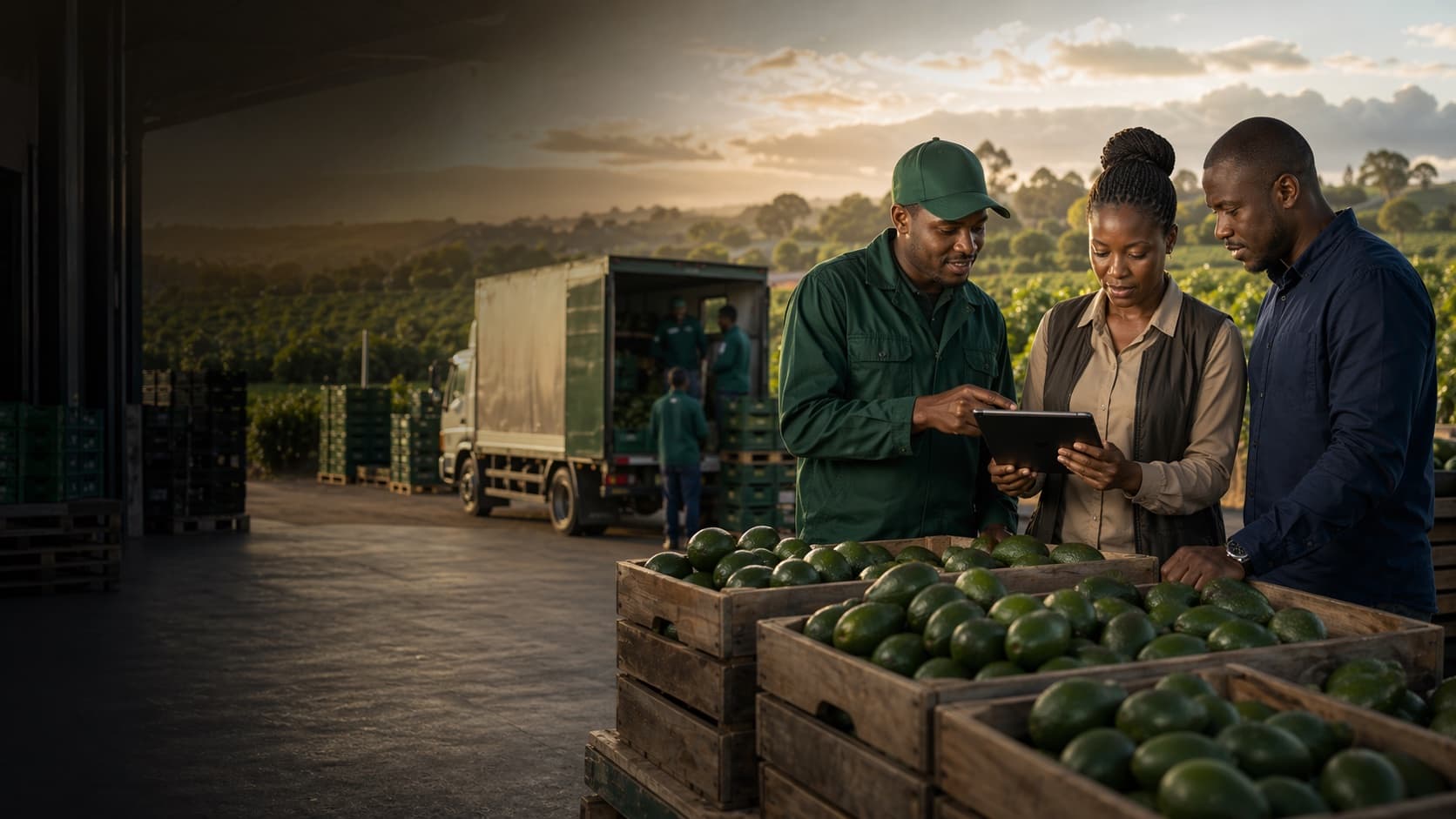
Harriet Njoki has been farming for eleven years. Her two-hectare vegetable farm in Kiambu supplies three local supermarket chains. She has never missed a delivery. She has never had a season without harvest. By any reasonable measure, she is a reliable farmer.
She has been turned down for a farm loan three times.
The reason her bank gives is always the same: insufficient collateral. What the bank means, though it rarely says this directly, is something different. Harriet's eleven years of flawless execution are invisible. There is no record of her harvests, her inputs, her farm practices or her workers. She has no documentation trail that a loan officer can assess.
She qualifies for a loan. Her records do not.
This is not a story unique to Harriet. It is the story of agricultural finance across East Africa. The $170 billion annual financing gap that keeps African farms from reaching their potential is not, at its root, a risk problem. It is a visibility problem.
Why Banks Say No
It is easy to believe that banks simply do not trust agriculture. That they see crops and weather and decide the whole thing is too unpredictable. This is a comfortable explanation because it suggests the problem lies outside the farmer's control.
But it is not accurate.
Banks lend to agriculture all the time. They lend to large commercial farms with audited accounts and documented operational histories. They lend to farms that can show ten seasons of production records, input receipts, certified worker lists and market contracts. They lend, in short, to farms they can see.
The barrier is not your farm. The barrier is that your farm is invisible to the institutions that fund growth.
A loan officer at a commercial bank in Nairobi has a framework for assessing risk. It requires evidence. Farm output trends. Input costs and yields over multiple seasons. Labour records that show operational stability. Procurement receipts that confirm expenses. Without these, the loan officer has nothing to put in the risk model. A farm with no documentation is, from a credit perspective, indistinguishable from one that has been failing quietly for years.
The Collateral Trap
The default assessment tool for Kenyan agricultural loans is land ownership. Banks ask for title deeds because they are the one form of evidence most farms can actually produce.
The problem is that land ownership tells a lender almost nothing about farming performance. A farmer with titled land and a series of poor harvests looks better on paper than a farmer with eleven years of excellent results and no formal tenure.
This is why the collateral model locks out so many of Kenya's most productive smallholders. Their productive value is real. Their documented proof of that value does not exist.
AFC Kenya and certain MFIs have been attempting to move beyond the title-deed model with value chain financing and operational history assessments. But these programmes require exactly what most farms cannot produce: a consistent, verifiable record of operations over time.
What Banks Actually Want to See
When a bank officer assesses a farm application under an operational history framework, the evidence they look for falls into four broad categories.
The first is task and activity records. What was planted, when, in which fields? What inputs were applied, at what rates, on what dates? Which workers completed which tasks? These records build a picture of how a farm actually runs.
The second is input and procurement documentation. Purchase receipts, supplier records, quantity tracking. These confirm that reported activities were backed by real expenditure.
The third is harvest and yield data. What was produced per acre, per season, over multiple years? How production compares to inputs applied. Evidence of consistency and improving performance over time.
The fourth is market linkage evidence. Delivery records, buyer contracts, payment histories. Proof that the farm produces for a real market at a consistent volume.
A farm that can present all four categories is not just better positioned for a loan. It is a fundamentally different kind of borrower from the bank's perspective. It is a farm that the bank can actually assess.
The M-Pesa Parallel
This shift has happened before in Kenya.
Before M-Pesa created a transaction record for millions of Kenyans, street vendors and small business owners were effectively invisible to formal lenders. They had income. They had reliability. They had no proof of either.
M-Pesa changed that. A few years of consistent mobile money activity became the foundation for Fuliza overdrafts, M-Shwari savings products, and eventually access to formal credit products. The transaction history replaced the collateral requirement.
Agricultural documentation is the equivalent step for farms. When every planting, every spray application, every harvest and every delivery is recorded and verifiable, a farm's operational history becomes its credit history. The loan conversation changes from 'can you prove you own land' to 'here are eleven years of documented performance.'
How Shambaboy Changes the Answer
Shambaboy records every farm activity automatically. Supervisors confirm task completion with GPS location stamps and photo verification. Input applications are logged against purchase records. Harvests are documented with timestamps and quantities.
Over time, this builds the operational history that farms need and often cannot produce. A farmer using ShambaBoy for two seasons has a performance record for internal reviews, workforce planning, and compliance preparation. After five seasons, that documented history shows how the operation has performed over time.
Harriet Njoki already does everything that qualifies her for a loan. She just needs the infrastructure that makes it visible.
That is all that separates her from the money she has already earned the right to access.
“Banks lend to agriculture all the time. They lend to large commercial farms with audited accounts and documented operational histories. They lend to farms that can show ten seasons of production records, input receipts, certified worker lists and market contracts. They lend, in short, to farms they can see.”
Related ShambaBoy SEO guides
Give supervisors mobile proof, approvals, and daily field visibility.
Learn moreTurn better methods into verifiable field execution records.
Learn moreConnect tasks, workers, plots, proof, and farm records in one system.
Learn moreAssign work, capture GPS photo proof, and approve tasks with confidence.
Learn more