Agriculture as leverage. Africa’s 60 per cent arable land advantage. AI-driven workforce shifts. Biological economy versus digital economy. Food security as geopolitical power. Farming as an accessible entry point. Structure and documentation as infrastructure. Soil as long term strategic asset.
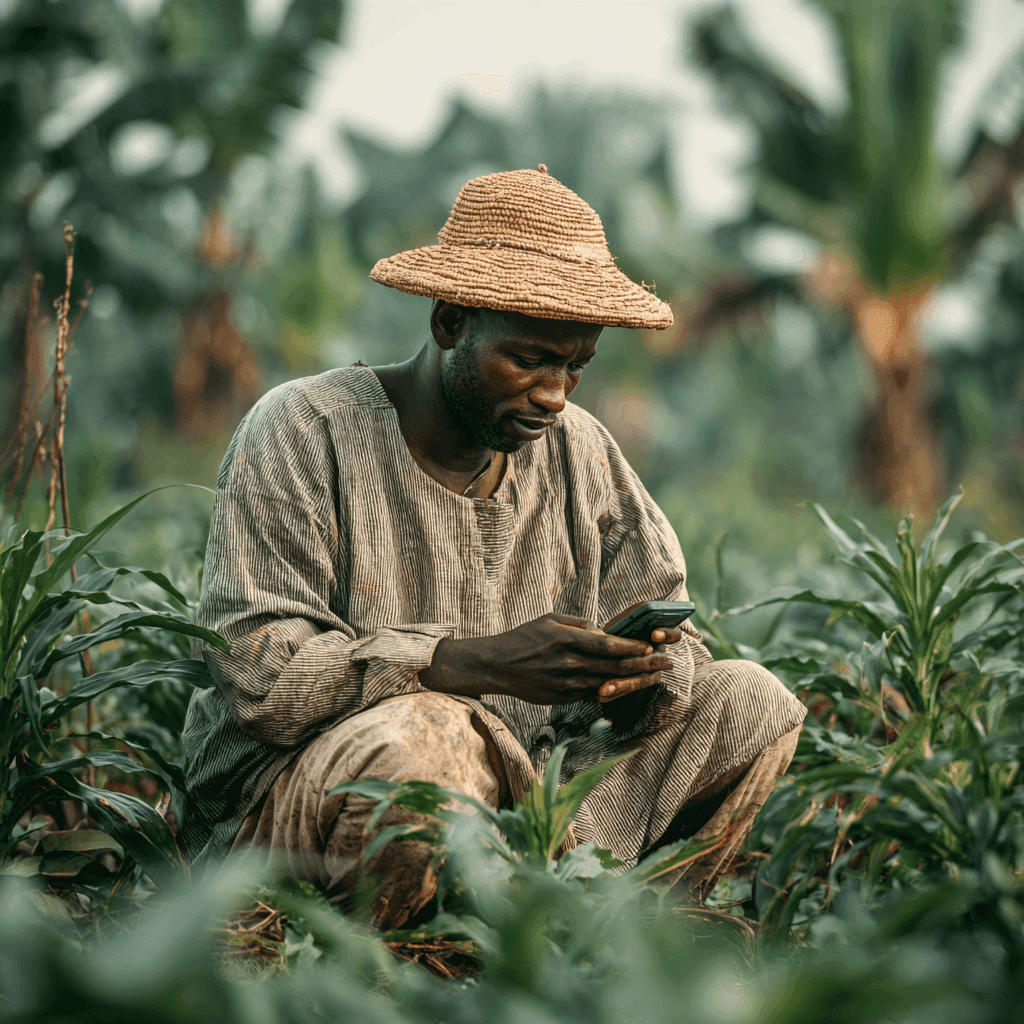
The other day, a friend suggested we market Shambaboy on Facebook because “that’s where the farmers are”. It was innocent advice, but it exposed something deeper. We still think of farming as a demographic, a rural identity, a fallback plan. We do not think of it as leverage.
Let me be blunt. The future is not just digital. It is biological.
Every major industry people admire today rests on something grown. Technology companies run on electricity. Electricity depends on land, water and fuel. Pharmaceuticals depend on plant chemistry. Fashion depends on cotton. Luxury depends on leather. Biofuels depend on crops. Even the most advanced AI model sits in a data centre that requires land, cooling systems and people who eat food three times a day.
You can scale code overnight. You cannot rush a harvest cycle. You can automate spreadsheets in weeks. You cannot manufacture fertile soil.
Here is the part most people are not thinking about. Africa holds roughly 60 % of the world’s uncultivated arable land. In a century defined by population growth, climate stress and fragile supply chains, that is not trivia. That is leverage.
Leverage is a position in a constrained world. If food becomes strategic, land becomes currency.
Now, bring this home practically. Farming is one of the most accessible industries on earth. You can start at home with vegetables in a small garden or containers. Learn how soil behaves. Learn water retention. Observe pests. Track growth cycles. Understand inputs and outputs.
The barrier to entry at a micro level is low. The knowledge compounds quickly. Once you understand the mechanics, you lease land, secure water, test, iterate and improve. Farming is not mysterious. It is disciplined repetition.
Meanwhile, look at what is happening in the broader economy. Across industries, executives are quietly instructing managers to integrate AI tools, not for theatre, but for cost reduction. Productivity without payroll growth. Output without benefits. Systems that run around the clock without leave days or HR complications.
White-collar professionals are discovering that tasks once considered specialised can now be automated or assisted. Middle management layers are being compressed. Efficiency is no longer optional. It is policy.
The uncomfortable truth is that many people are in a queue. Not a visible one, but a structural one. Technology does not sleep. It does not unionise. It does not negotiate salaries. It improves continuously.
Now ask a different question. How long before AI replaces soil? How long before it replaces rainfall? How long before it replaces biological growth cycles?
AI will transform agriculture through precision and optimisation, but it will not eliminate the foundational need for land and cultivation. It will reward structured operators. It will not replace the Earth.
In a world where digital roles are increasingly fluid and replaceable, biological production remains anchored in physical reality.
Africa’s arable land statistic is not an accident of geography. It is a strategic position in a future defined by resource pressure. If the global population continues to grow and climate volatility continues to rise, then food security becomes geopolitical leverage.
And yet, we still treat farming as a secondary activity.
Perhaps the more provocative thought is this. What if the opportunity many are searching for in code, trading, speculation and digital side hustles is sitting in soil?
This does not mean abandoning careers tomorrow. It means understanding where structural value lies. It means recognising that agriculture is not backward. It is foundational.
At Shambaboy, we view agriculture as infrastructure. We focus on structure, documentation and execution because leverage without systems is wasted. If Africa holds the land, the next step is building the operational discipline to convert that land into measurable, investable output.
The world is racing towards automation. The field remains patient. The digital economy moves fast. The biological economy endures.
The future will be written in code.
But it will still be fed by soil.
“Across industries, executives are quietly instructing managers to integrate AI tools, not for theatre, but for cost reduction. Productivity without payroll growth. Output without benefits.”
Related ShambaBoy SEO guides
Give supervisors mobile proof, approvals, and daily field visibility.
Learn moreTurn better methods into verifiable field execution records.
Learn moreConnect tasks, workers, plots, proof, and farm records in one system.
Learn moreAssign work, capture GPS photo proof, and approve tasks with confidence.
Learn more