
Loading
If you can grow it, you can export it. This article breaks down how African farmers can access export markets, increase revenue by 15–40%, and meet GlobalGAP standards through better documentation, traceability and farm verification systems. Structured farming unlocks premium pricing, buyer confidence and long-term income growth.
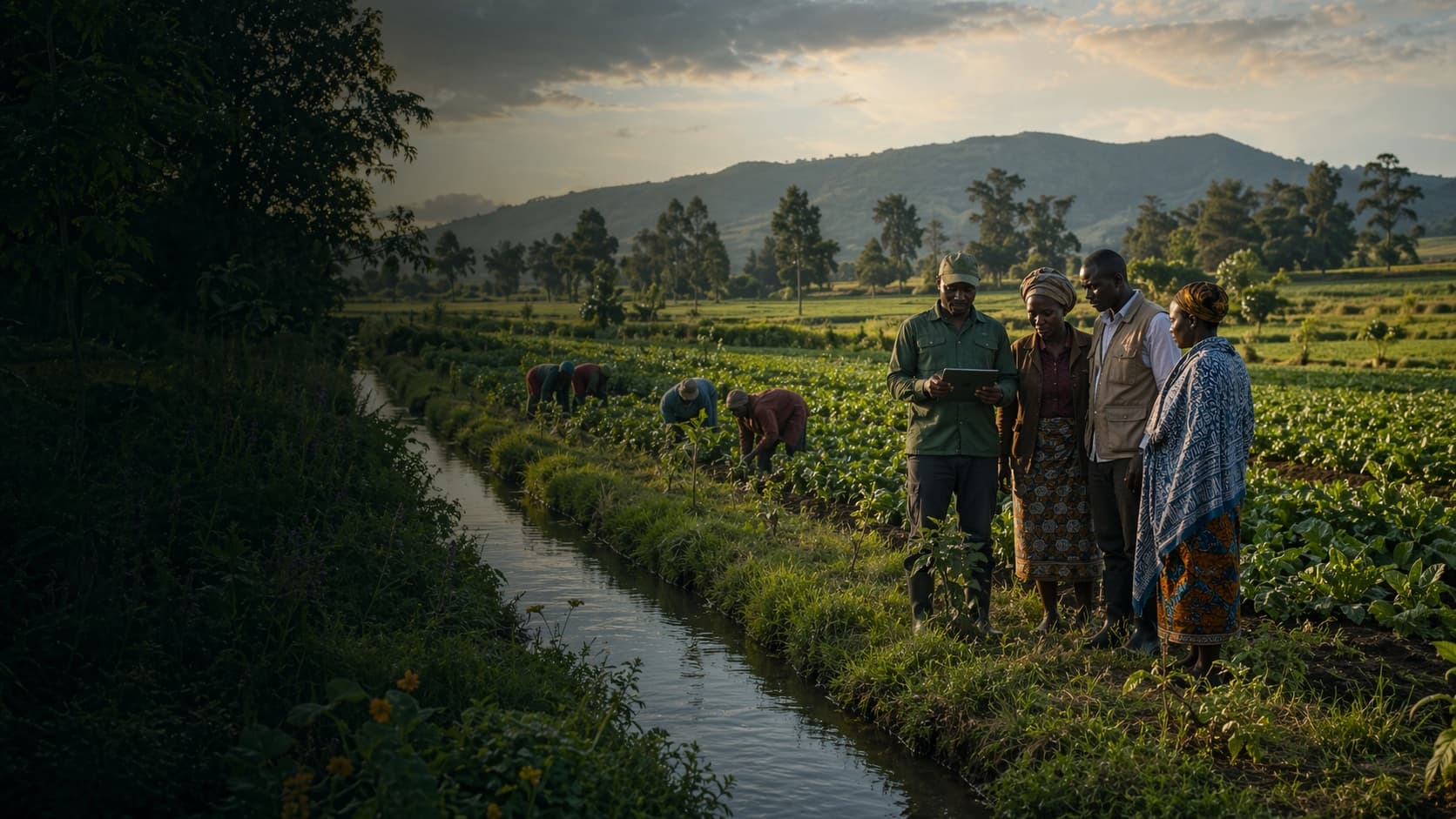
Most farmers do not believe they can export. Not because they cannot grow quality produce, but because exporting feels reserved for “big people”. Corporate farms. Large companies. People who speak in containers and contracts. So they never even try. And that belief alone quietly limits income before the first negotiation even begins.
Across Kenya, Ghana, Ethiopia and Rwanda, small and medium-sized farms are already supplying export chains. Not because they own thousands of acres, but because they operate within structured systems.
A ten-acre French bean farmer in Kirinyaga can enter a European supply chain. A mango grower in Ghana can supply EU buyers. A chilli farmer in Naivasha can contract with Middle Eastern importers. The barrier is not land size. It is proof. Exporting is not mystical. It is structured.
Take avocados. Locally, farmgate prices fluctuate violently. When supply floods the market, brokers dictate pricing. A farmer might accept KES 8 to KES 12 per kilo in weak seasons. In stronger seasons, prices climb, but unpredictably. Now compare that with export-aligned avocados under structured contracts. Prices are negotiated in advance. Grading is defined. Rejection rates are managed.
In favourable windows, realised returns can exceed local averages by 20–40%.
Buyers in Europe, the UK and the Middle East are not paying more because the soil is different. They are paying more because the risk is lower. Risk is lowered by standards.
When farmers hear “GlobalGAP”, they imagine impossible hygiene rules, endless paperwork and foreign requirements that feel unreachable. What is rarely said openly is that most farmers are already doing 60–70% of what is required. They are applying fertiliser carefully.
They are managing pests responsibly. They are supervising workers. They are grading produce. What they are not doing consistently is documenting. Documentation feels secondary. Export markets treat it as primary. If you can grow quality produce, you are already halfway there. The remaining half is structure.
GlobalGAP is not about impressing auditors. It is about speaking the language of buyers. When a European supermarket chain sources green beans from Kenya, it carries regulatory risk. If contamination occurs, traceability must be immediate. If pesticide residues exceed limits, documentation must exist. If worker welfare is questioned, proof must be available. Certification reduces their exposure. Reduced exposure commands better pricing.
Imagine you are a ten-acre chilli farmer currently selling into regional markets at variable prices. Your annual gross revenue is KES 12 million. Through structured certification and buyer alignment, you access an export contract that improves pricing by even 15% across 70% of your production.
That translates into roughly KES 1.26 million additional revenue annually. Not savings. Revenue. Over five years, that difference exceeds KES 6 million. That is the cost of believing exporting is “not for you”.
Many farms attempt compliance only when an exporter demands it. They scramble. They reconstruct records. They reverse-engineer proof weeks before an audit. That approach fails long-term. The farms that truly earn from export markets treat compliance as daily behaviour. Spray records are logged immediately. Field tasks are recorded as they happen. Worker hygiene checks are documented in real time. Traceability codes are structured from the planting stage. When documentation becomes ambient, exporting becomes repeatable. Repeatability is what buyers pay for.
Shambaboy was not built as a generic farm app. It was built around verification infrastructure. GPS-tagged task tracking, time-stamped execution logs, photo evidence linked to specific field activities and worker-level accountability tied to operational history create visibility.
This is not about surveillance. It is about evidence. When an auditor requests spray records for Block B in April, you retrieve them instantly. When an exporter asks for traceability data, you export it digitally. When a financier reviews your operation, you present a structured history instead of verbal assurances. That changes how you are perceived. Perception influences price.
Certification not only unlocks export markets. It unlocks credibility. Credibility improves negotiation. Negotiation improves margins. Margins improve cash flow. Cash flow improves expansion capacity. Expansion increases revenue.
This is compounding leverage. If Africa holds some of the most fertile land in the world, the real question is not whether farmers can grow export-grade produce. It is whether they are operating in export-grade systems. Standards are procedural. Procedural skills can be learned. Procedural can be implemented. Procedural can be digitised. Once digitised, procedural becomes scalable.
If you can grow it, you can export it. The soil is not the problem. Belief and structure are. The next generation of African agricultural wealth will not be built by the largest farms. It will be built by the most structured ones. Exporting is not reserved for the elite. It is reserved for the organised. And organisation is a decision.
“Most farmers do not believe they can export. Not because they cannot grow quality produce, but because exporting feels reserved for “big people”. Corporate farms. Large companies. People who speak in containers and contracts. So they never even try. And that belief alone quietly limits income before the first negotiation even begins.”
Related ShambaBoy SEO guides
Give supervisors mobile proof, approvals, and daily field visibility.
Learn moreTurn better methods into verifiable field execution records.
Learn moreConnect tasks, workers, plots, proof, and farm records in one system.
Learn moreAssign work, capture GPS photo proof, and approve tasks with confidence.
Learn more