Export markets enforce PHI/REI and residue limits, but local supply chains often lack the same checks. This piece explains why unsafe harvests persist and how traceability can close the gap.
A recent documentary circulating locally raised an uncomfortable issue. Pesticides banned in parts of the European Union are still being used on farms in Kenya. For many viewers, this was framed as negligence or malice. For farmers, it felt like yet another accusation divorced from reality.
The truth sits somewhere in between.
Kenya does not lack regulation. For export produce, our systems are among the strictest on the continent. Chemical use is controlled. Records are audited. Residue limits are enforced. Produce that fails does not leave the country.
The gap appears elsewhere. What applies to export markets often does not apply to food grown for local consumption.
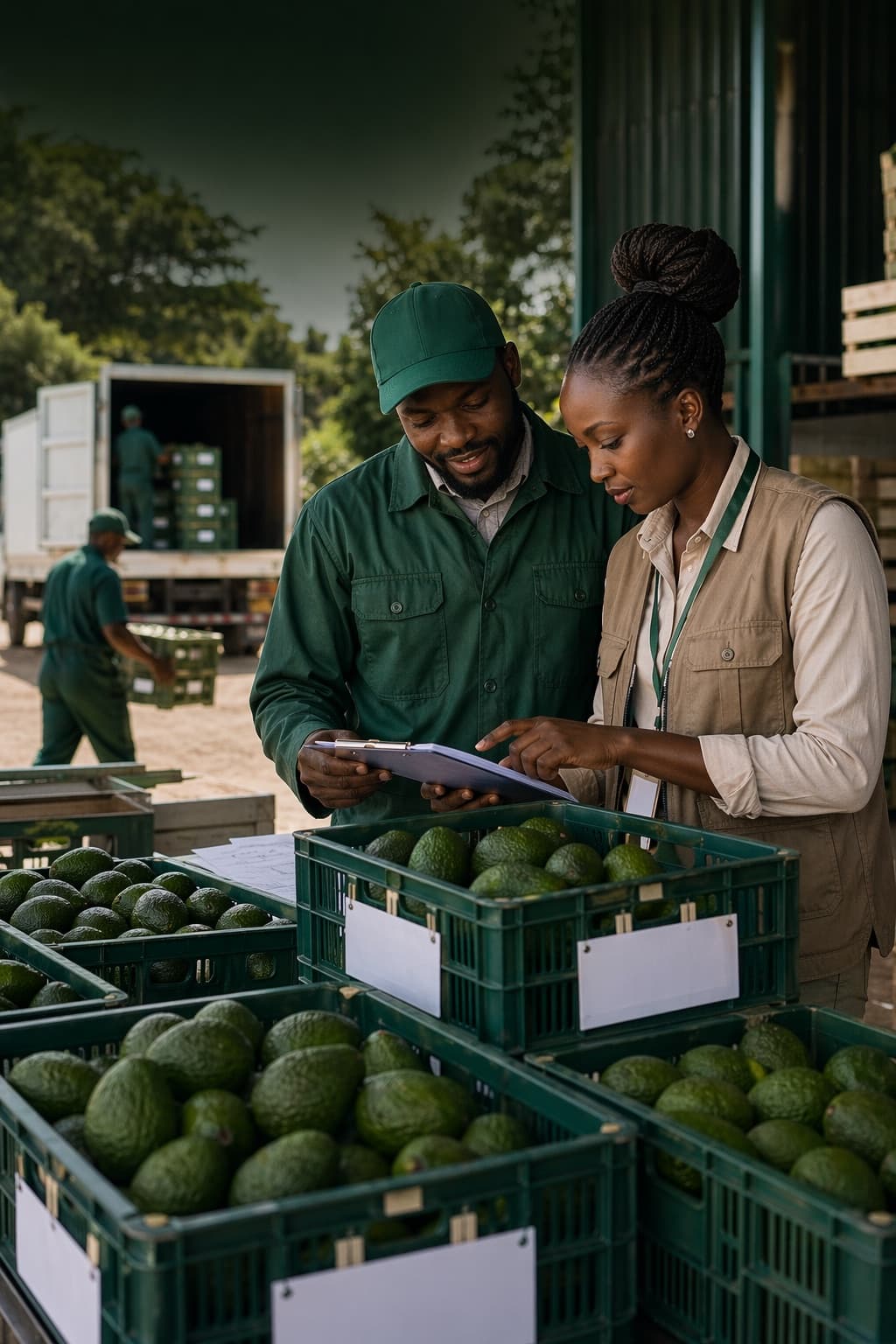
For export produce, farmers must comply with international standards such as GlobalG.A.P. These standards dictate which chemicals can be used, how they are applied, and most importantly, when produce can be harvested after application.
This is where the concept of PHI (Pre-Harvest Interval) and REI (Re-entry Interval) comes in.
PHI is the minimum number of days that must pass between the last pesticide application and harvest. It allows chemical residues to degrade to levels considered safe for consumption. Similarly, REI protects the people on the farm, marking the time that must pass before it is safe for a worker to step back into the field.
Export markets enforce these strictly. Records are checked. Audits are routine. Traceability is mandatory.
For local markets, enforcement is looser. Kenya has recently begun random residue testing in major markets, which is a positive step. But random testing only catches what it sees. It does not prevent misuse. And it does not educate farmers or consumers on why timing matters.
Consider a farmer in Oloitoktok growing tomatoes for two different buyers.
For his export contract, he knows that if he sprays for Late Blight today, he cannot touch those tomatoes for at least 7 days (the PHI). If an inspector finds even a trace of that chemical above the limit, his entire batch is rejected, his contract is canceled, and he bears the cost of destruction. Safety here is a prerequisite for payment; he is "keen" because the system leaves him no choice.
In contrast, for the local market, the same farmer is governed by the volatile laws of supply. If he sprays his tomatoes on a Tuesday but notices on Thursday that market prices in Nairobi have suddenly spiked due to a shortage, the economic pressure to harvest immediately is immense. Because there is no record-checking at the local depot, the tomatoes are harvested and sold five days before they are safe. In the local market, the "price of the day" almost always overrides the "safety of the crop."
Most farmers do not intentionally poison consumers. What often happens is more mundane.
A pest outbreak appears close to harvest. The pressure to save the crop is immediate. A chemical is applied because it works. The PHI is long. The market is close. The choice becomes economic rather than technical.
Furthermore, the farmer is often the first victim. In many cases, they are sold counterfeit chemical products in familiar bottles that contain banned or highly concentrated toxins not listed on the label. Without a way to track the source of these inputs, the farmer unknowingly risks their own health and the safety of the soil.
In some cases, farmers are using chemicals that are effective but outdated. This is not unique to Kenya. The history of chemical misuse is global. The Monsanto cases in the United States and elsewhere did not arise from individual farmers acting maliciously. They emerged from systems where long-term health impacts lagged behind commercial adoption. The lesson from those incidents was not simply that chemicals are bad. It was that unverified use is dangerous.
Export markets are safer, not because foreign consumers matter more, but because the systems demand proof.
Every spray is recorded. Every date matters. Every batch can be traced back to a specific field, on a specific day, using a specific input. When something goes wrong, responsibility is clear.
Local food systems lack this visibility. Produce moves through markets without a history. Consumers cannot tell how it was grown. Retailers cannot distinguish careful farmers from careless ones, or identify those using genuine inputs versus dangerous counterfeits.
This is slowly changing. Some local supermarkets are beginning to demand GlobalG.A.P. compliance from their suppliers. Not because of pressure from abroad, but because local consumers are becoming more informed and more selective. Food safety is no longer an abstract issue. But compliance without traceability is fragile.
Traceability does not mean banning chemicals. It means knowing exactly what was used, when it was used, and when it is safe to harvest. It is about protecting the consumer from residues, but also protecting the farmer from toxic exposure and fraudulent products.
When farms keep proper records, PHI and REI are respected naturally. Harvesting decisions become informed rather than reactive. Dangerous shortcuts become harder to justify.
ShambaBoy was built to make this practical.
By recording farm tasks as they happen, tied to time and location, allows farmers to maintain accurate spray records without paperwork. PHI and REI become visible alerts. Input sources are logged, making compliance part of daily operations.
For farmers, this means safer working conditions, healthier crops, and access to better markets. For retailers, it means confidence in their supply chain. For consumers, it means trust in the food they buy.
Traceability is not about punishment. It is about protection. As local markets evolve and standards rise, farms that can show their work will be rewarded. Those who cannot will struggle, regardless of effort.
Food safety is not a foreign concept. It is a systems problem. And systems can be fixed. The future of Kenyan agriculture depends not just on what we grow, but on how well we can prove it was grown safely.
“Traceability is not about punishment. It is about protection.”
Related ShambaBoy SEO guides
Give supervisors mobile proof, approvals, and daily field visibility.
Learn moreTurn better methods into verifiable field execution records.
Learn moreConnect tasks, workers, plots, proof, and farm records in one system.
Learn moreAssign work, capture GPS photo proof, and approve tasks with confidence.
Learn more