Traceability is the ability to prove what happened, where, and when — the foundation of trust in modern agriculture.
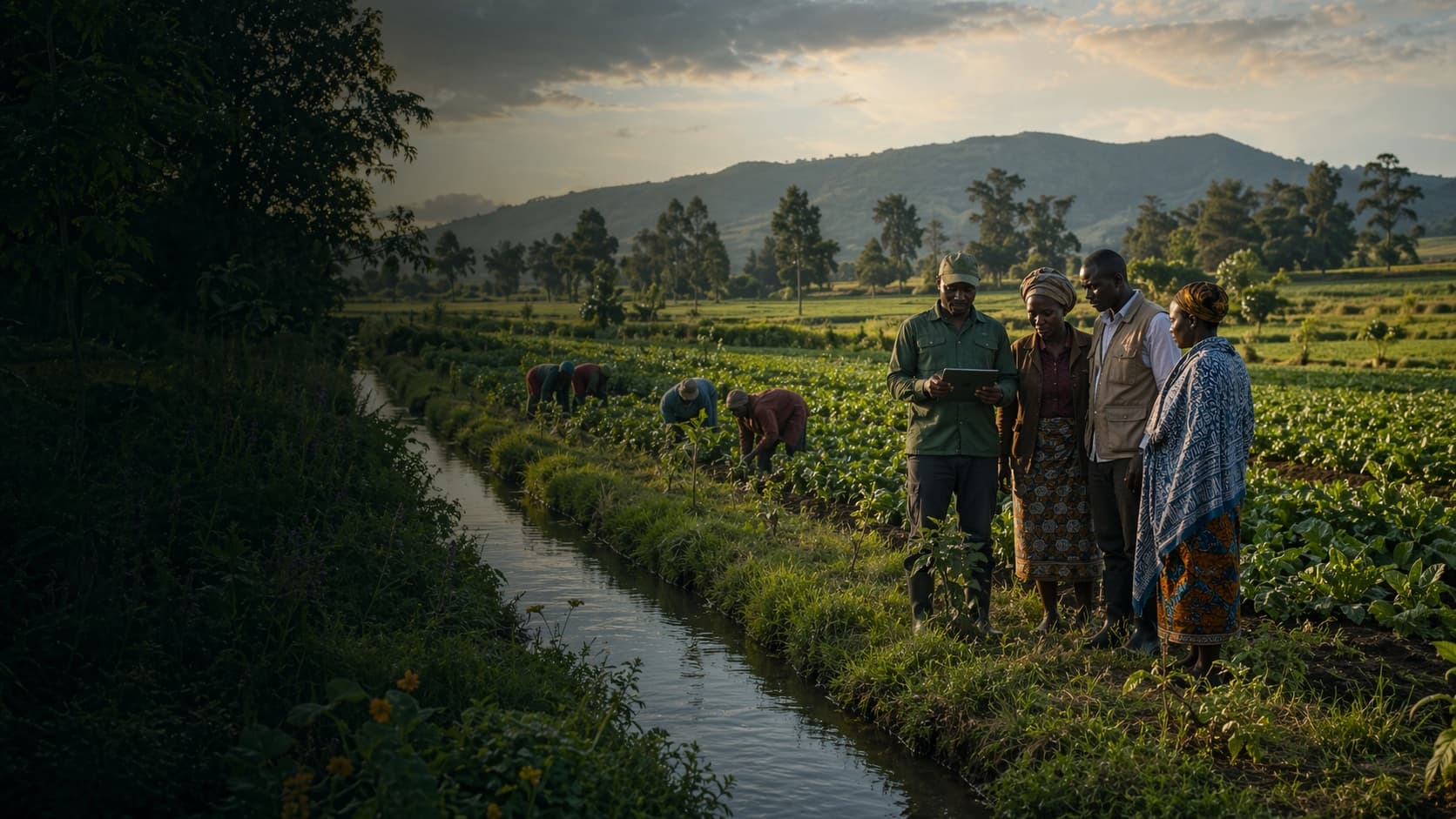
Traceability is often misunderstood.
To many farmers, it sounds like extra paperwork. To consumers, it feels like a foreign concept tied to export markets. To regulators, it appears as another compliance requirement. In reality, traceability is much simpler and far more important than most people realise.
Traceability is the ability to answer one basic question with confidence:
What happened, where did it happen, and when did it happen?
In agriculture, that question applies to everything. What inputs were used. When they were applied. Who applied them. When harvesting occurred. How produce moves from the field to the market.
When these answers exist only in memory or conversation, trust becomes fragile.
Agriculture has always relied on trust. Farmers trusted workers. Buyers trusted suppliers. Consumers trusted markets. That system worked when supply chains were short and local.
Today, supply chains are long, complex, and under pressure.
Food moves across regions and borders. Chemical inputs are more potent. Climate variability increases risk. Consumers are more informed and less forgiving. One incident can damage an entire sector.
In this environment, trust without evidence is no longer enough.
Traceability is how trust survives scale.
On many farms, tasks are executed correctly, but not recorded. A pesticide is applied at the right time. The correct PHI is observed. Harvesting is done responsibly. Yet there is no record to prove it.
When produce enters the market, it looks the same as produce that was handled poorly.
This creates two problems.
First, good farmers are not rewarded. Careful practices do not translate into better prices or better access to markets.
Second, bad practices are difficult to identify. When residue tests fail or health concerns arise, responsibility is unclear. The entire supply chain absorbs the blame.
Traceability separates effort from assumption.
Export markets are strict about traceability for a reason. They are accountable to regulators, consumers, and legal frameworks. Every box of produce must be linked back to a field, a date, and a process.
This is why standards like GlobalG.A.P. exist. Not to burden farmers, but to create confidence at scale.
The irony is that food grown for local consumption often lacks the same safeguards, even though it is eaten by the same families who grow it.
This is slowly changing. Local retailers are beginning to demand higher standards. Consumers are asking more questions. Random residue testing is increasing. But without traceability at the farm level, these efforts remain reactive.
There is a common fear that traceability is about surveillance or punishment. In practice, it does the opposite.
When records exist, farmers are protected. They can show what was done correctly. They can defend themselves against false claims. They can identify where problems actually originate rather than guessing.
Traceability turns farming from a blame-driven environment into a learning-driven one.
Mistakes are no longer hidden. They become data. Patterns emerge. Training improves. Decision-making becomes calmer and more accurate.
Many traceability systems collapse because they are designed for auditors, not for farms. They rely on paperwork, spreadsheets, or systems that are disconnected from daily work.
When record-keeping feels separate from execution, it is neglected.
Effective traceability must be embedded in the work itself. It must be simple, timely, and aligned with how farms actually operate.
This is where tools like ShambaBoy come in.
Instead of asking farmers to remember and report later, tasks are recorded as they happen. Execution is tied to time and location. Spray records, harvest dates, and labour activities become part of the workflow, not an afterthought.
This creates a living record of the farm.
PHI compliance becomes visible. Harvest decisions become safer. Buyers and retailers gain confidence. Farmers gain leverage.
Traceability stops being a burden and becomes an asset.
As food systems tighten and standards rise, traceability will no longer be optional. Farms that can show their work will access better markets, cheaper capital, and stronger partnerships.
Those who cannot will struggle, regardless of how hard they work.
Traceability is not about perfection. It is about honesty. About knowing what happened and being able to prove it.
The future of agriculture belongs to farms that are willing to be seen.
Not watched.
Seen.
Because in food systems, visibility is trust.
Related ShambaBoy SEO guides
Give supervisors mobile proof, approvals, and daily field visibility.
Learn moreTurn better methods into verifiable field execution records.
Learn moreConnect tasks, workers, plots, proof, and farm records in one system.
Learn moreAssign work, capture GPS photo proof, and approve tasks with confidence.
Learn more