Fifteen years. Fourteen farms. Skills that built an export economy. Not a single record travels with him. This is what that costs.
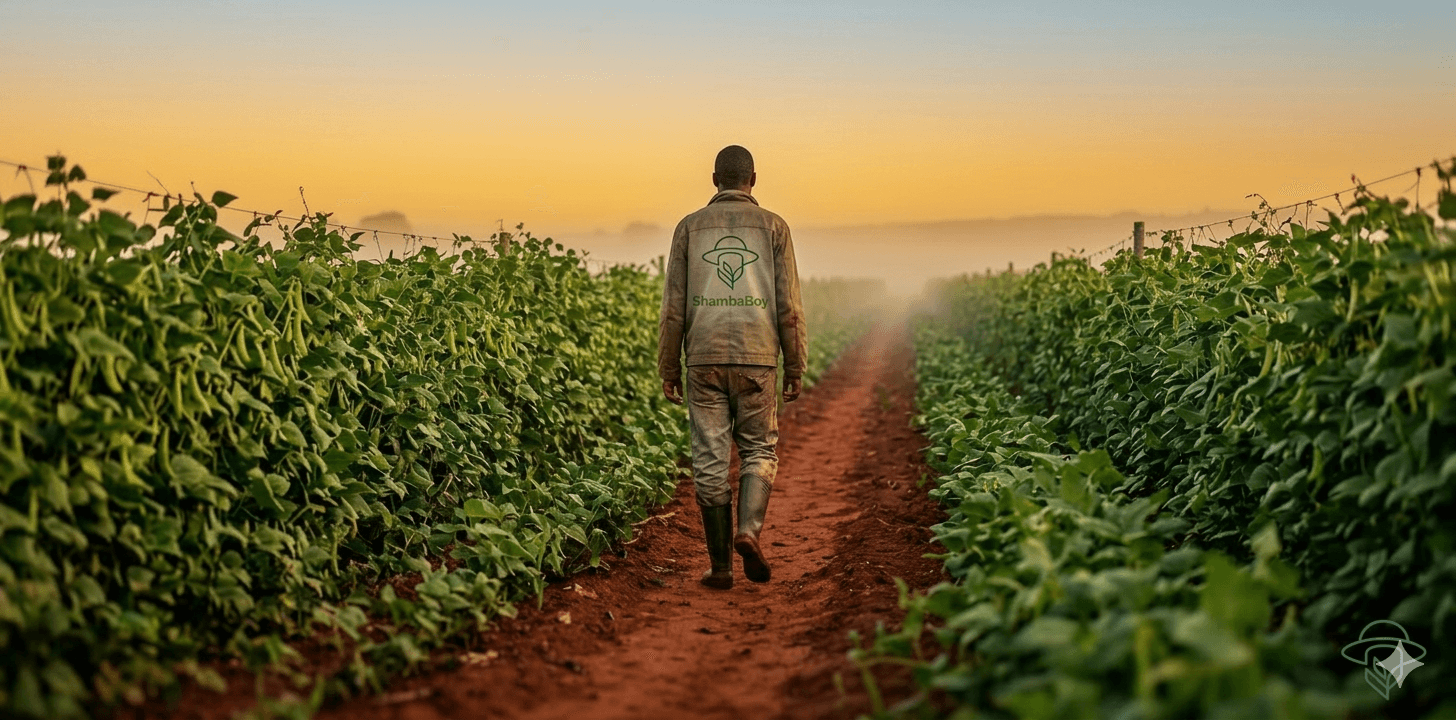
The invisible workforce building East Africa's agricultural economy into a void, and what it is costing everyone.
The Walk Between Farms
Peter does not remember the exact number of farms he has worked on.
Twelve, he thinks. Maybe fourteen. He started at seventeen on a French bean farm outside Thika, running irrigation lines before sunrise and carrying harvest crates until his shoulders gave out in the afternoon. He learned to read soil moisture by pressing his thumb two inches into the ground. He learned which pesticide concentrations burned the leaves and which ones held. He learned how to manage a team of eight seasonal workers through a harvest week without losing a single crate to spoilage.
He is thirty-two now. He supervises a team of eleven on a snow pea farm in Nyandarua. His employer trusts him with decisions that directly affect whether the farm retains its export contract with a buyer in the Netherlands.
When Peter walks off this farm and onto the next one, he will carry all of that knowledge in his body and none of it on paper.
The next employer will know nothing about him except what he says in a conversation that lasts ten minutes.
The Record That Does Not Exist
There is no document that proves Peter applied chemicals correctly across seven consecutive growing seasons without a single compliance incident.
There is no record that proves he supervised a harvest that met GlobalGAP export standards three years running.
There is no credential that tells a new employer he can be trusted with a team, with inputs worth hundreds of thousands of shillings, with decisions that sit between a farm and its most valuable export contract.
There is his word. There is the phone number of a previous employer who may or may not answer. There is a handwritten reference letter on a piece of paper that cannot be verified by anyone.
For fifteen years of skill, that is everything Peter has.
He is not unusual. He is the entire East African agricultural workforce.
Skilled, Invisible, and Replaceable
Across Kenya, Tanzania, Ethiopia, and Uganda, millions of agricultural workers are doing what Peter does. Moving between farms. Building expertise. Developing the kind of practical knowledge that no classroom produces and no certification programme captures, because the work happens in fields at five in the morning under conditions that change with every season.
None of that knowledge travels.
Not because it is not real. Not because it is not valuable. But because the agricultural sector has never built a mechanism to make it legible.
A nurse in Nairobi has a professional registration number. An accountant has a practising certificate. A driver has a licence that follows them from employer to employer and tells every new one exactly what they are qualified to do.
A farm worker with fifteen years of verified horticulture experience, a compliance record, and supervisory competency has a conversation.
The consequence of that gap is not just personal to Peter. It reverberates through every institution that touches African agriculture.
What Invisibility Actually Costs
When a farm worker is unverifiable, the farm absorbs the risk of every hiring decision entirely.
A farm owner bringing on a new supervisor cannot know whether this person has ever managed a GlobalGAP-compliant operation. Cannot know whether they have a history of input mismanagement on previous farms. Cannot know whether their reference letter reflects reality or was written by a cousin. So the farm owner does what every employer does under conditions of radical uncertainty: they pay less, trust less, delegate less, and supervise more.
That is the invisible tax that unverifiable labour places on every farm that employs it.
The farm that cannot trust its workforce cannot leave the farm. That is James, stuck on his three acres in Nyandarua, missing his third meeting with a Dutch export buyer because the last time he left for forty-eight hours, the operation unravelled. His inability to leave is not a personal failing. It is the rational response to a workforce he has no way to verify.
For the worker, the consequence is a permanent ceiling.
Peter's skills are real, but his ceiling is determined by what a new employer is willing to risk on a conversation. The farms that pay the most, trust the most, and offer the most responsibility are the farms that can afford to take the least risk. Peter cannot get to those farms because he cannot prove he deserves to be there.
The result is a continental agricultural workforce that is far more capable than the wages it earns, and an agricultural sector that is far less productive than the people working in it.
The Continental Opportunity Nobody Is Capturing
The African Continental Free Trade Area is quietly opening something that has never existed before: a legitimate pathway for skilled labour to move across borders and be recognised for what it can do.
Agricultural workers are among the most mobile on the continent. They follow seasons. They follow contracts. They follow word of mouth about farms that pay fairly and treat workers with dignity.
But mobility without verifiability is just displacement.
A Kenyan farm worker who crosses into Tanzania to work a tobacco harvest and then returns to take a supervisory role in Nairobi horticulture should be carrying a career record that any employer in any of those contexts can trust. The skills accumulated across that journey are real. The compliance incidents that did or did not occur are real. The team management experience is real.
None of it transfers. None of it compounds. The worker starts from zero at every new conversation because the sector has never decided that agricultural labour deserves the same legibility it grants to every other skilled profession.
That decision has a cost. And as the continental labour market opens, that cost is going to grow.
The Institutions Paying for This Problem Without Knowing It
The agricultural worker's invisibility is not only a labour market problem. It is a data problem that sits at the centre of almost every institutional failure in African agriculture.
The bank that will not lend to smallholder farmers without collateral is, at least in part, making that decision because it cannot verify the human competence managing the farm. A credit model that could say this supervisor has a seven-year compliance record on certified export farms would change the risk calculation entirely. That model does not exist because the record does not exist.
The carbon developer trying to verify that specific land management practices occurred on specific plots needs to know that the person who applied those practices was trained, accountable, and traceable. Without a worker identity record, the verification chain has a human gap that no satellite image can close.
The county government, designing a workforce development programme for its agricultural sector, cannot measure what it is building toward. It has no baseline for what skills exist, where they are concentrated, or what the gap between current capacity and export-market requirements actually looks like.
Every one of those institutions is making worse decisions because Peter walked off fourteen farms carrying everything he knows in his body and nothing in a record that anybody can read.
What a Verified Career Looks Like
Imagine for a moment that Peter's career existed on paper the way it exists in his hands and his instincts.
Every farm. Every season. Every chemical application logged, verified, and attributed to him by name. Every harvest he supervised, he recorded against a compliance standard that a buyer in the Netherlands would recognise. Every team he managed had an outcome record that a new employer could review before the ten-minute conversation even began.
That record would not just change Peter's ceiling. It would change the risk calculation for every farm that employed him. It would change the credit product a bank could offer him. It would change the training investment a county government could justify making in him. It would change the carbon project that a developer could build around the land he manages.
A verified agricultural career is not a luxury for the worker. It is infrastructure for every institution that depends on what the worker does.
The Farms That See This First Will Not Look Back
East Africa's agricultural economy is being built on unverifiable labour. The skills are there. The commitment is there. The fifteen years of practical expertise are there.
The record is not.
The farms, institutions, and governments that decide to change that in the next three years will find themselves with something that no competitor can replicate quickly: a workforce whose competency is provable, whose history is traceable, and whose contribution to every compliance standard, carbon project, and export contract can be demonstrated to any institution that needs to see it.
The farms that do not will keep making hiring decisions in ten-minute conversations and wondering why they cannot leave the ground.
Peter is walking between farms right now.
Is your farm on Shambaboy?
“"A verified agricultural career is not a luxury for the worker. It is infrastructure for every institution that depends on what that worker does."”