
Loading
Most export buyers turn away farms not because of produce quality but because proof is missing; small documentation habits make farms export-ready within a season.
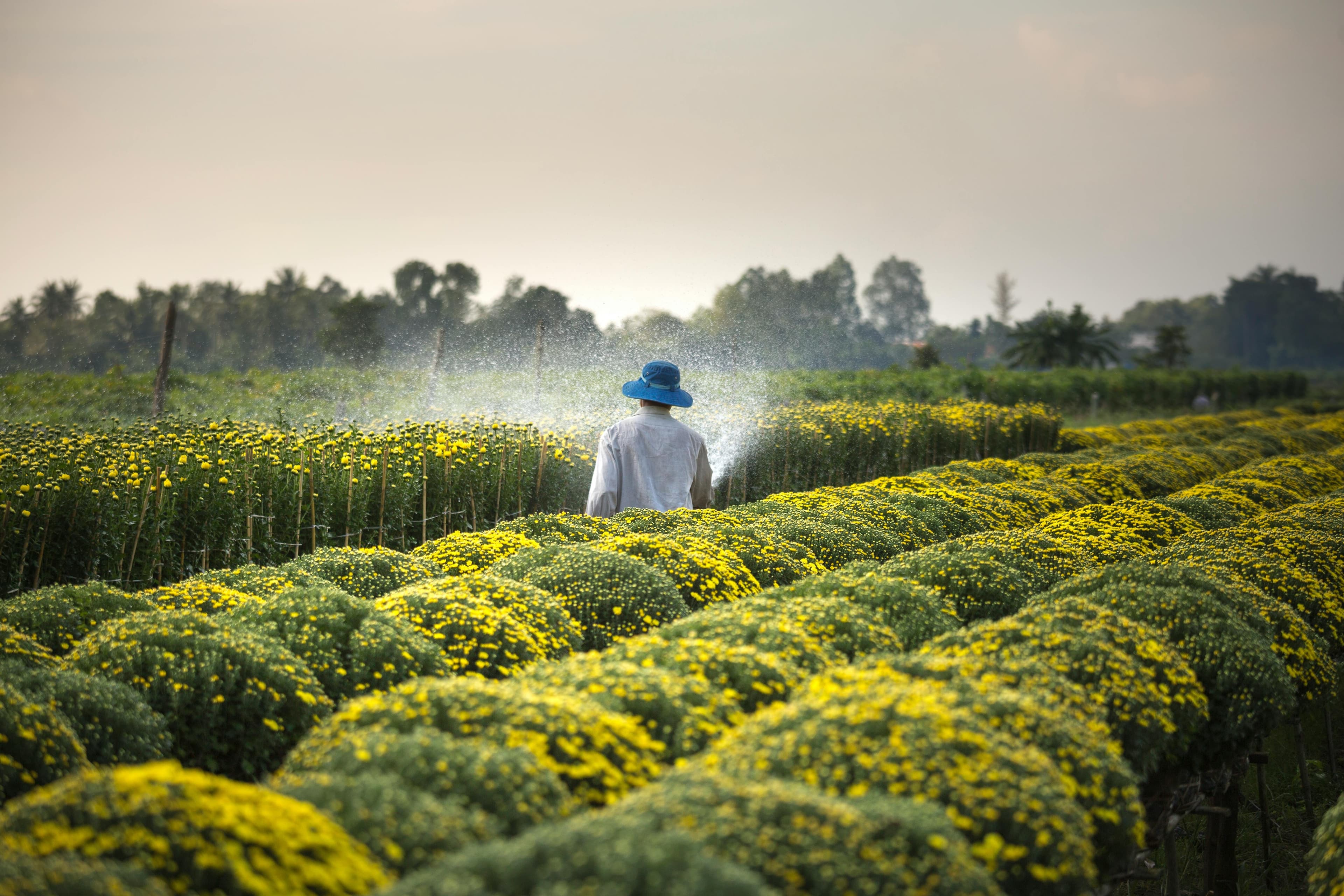
Many African farmers believe export markets are far beyond their reach.
They assume entry requires major investments or large production volumes.
In reality, most export opportunities fail for a much simpler reason.
Farms cannot prove consistency.
Export markets do not reject farmers because their produce is poor.
They reject them because their documentation is incomplete, inconsistent, or entirely missing.
With a few small operational tweaks, most farms can become export-ready within a single season.
Here is how.
Export buyers operate on evidence.
They need to see:
These requirements exist not to complicate farming but to protect consumers and ensure quality.
However, most farms rely on memory, verbal updates, and rough notes that cannot withstand audit scrutiny.
This gap between daily work and recorded proof is the real barrier to export entry.
A mango farm in Makueni recently approached a regional exporter.
The fruit quality was acceptable.
The volume was sufficient.
The buyer was interested.
The exporter asked for three basic documents:
The farm did everything correctly in practice.
But none of it was recorded.
The supervisor offered to “write the logs”.
The buyer declined.
Export markets do not work on “we always”.
They work on “show me”.
The opportunity disappeared.
And with it, a contract worth more than the farm’s annual local sales.
The painful truth:
The farm did not fail agriculturally.
It failed administratively.
Export buyers want predictable partners.
They do not expect perfection, but they demand traceability.
Documentation proves:
This proof builds trust.
And trust is what opens markets.
Most farms do not need more land or more workers.
They need better routine discipline and documentation.
Here are the tweaks that open the door.
A simple log showing:
This one tweak removes almost half the friction in export audits.
Examples include:
These logs give buyers confidence without requiring new buildings or major capital.
This ensures:
Harvest verification is one of the simplest yet most powerful compliance tools.
Such as:
These records demonstrate consistency and discipline, even when buyers do not explicitly request them.
Time-stamped photos and verifiable logs solve:
Evidence transforms a farm from “we did it” to “here is the proof”.
ShambaBoy eliminates the guesswork.
It turns daily routines into verifiable data that export markets trust.
Workers
Record tasks using in-app evidence that is time and location stamped.
Supervisors
Validate routines with structured logs rather than verbal summaries.
Owners and Diaspora
Gain a transparent record of all activities.
The Outcome
A farm with clean, digital, verifiable documentation that matches what export buyers require.
ShambaBoy does not create new work.
It simply captures the work already being done.
Within three months, any farm using ShambaBoy looks organised, consistent, and export-ready.
Agriculture in Africa is rich with potential.
What limits farms is not production capacity but proof of performance.
Small operational tweaks open the door to:
Documentation is the bridge between farmers and markets.
ShambaBoy provides that bridge.
It turns daily work into verified truth.
It turns routines into records.
And it turns farms into reliable, competitive suppliers.
Export opportunity is closer than farmers think.
All it needs is evidence.
“Export markets are not far; they simply require proof.”
Related ShambaBoy SEO guides
Give supervisors mobile proof, approvals, and daily field visibility.
Learn moreTurn better methods into verifiable field execution records.
Learn moreConnect tasks, workers, plots, proof, and farm records in one system.
Learn moreAssign work, capture GPS photo proof, and approve tasks with confidence.
Learn more